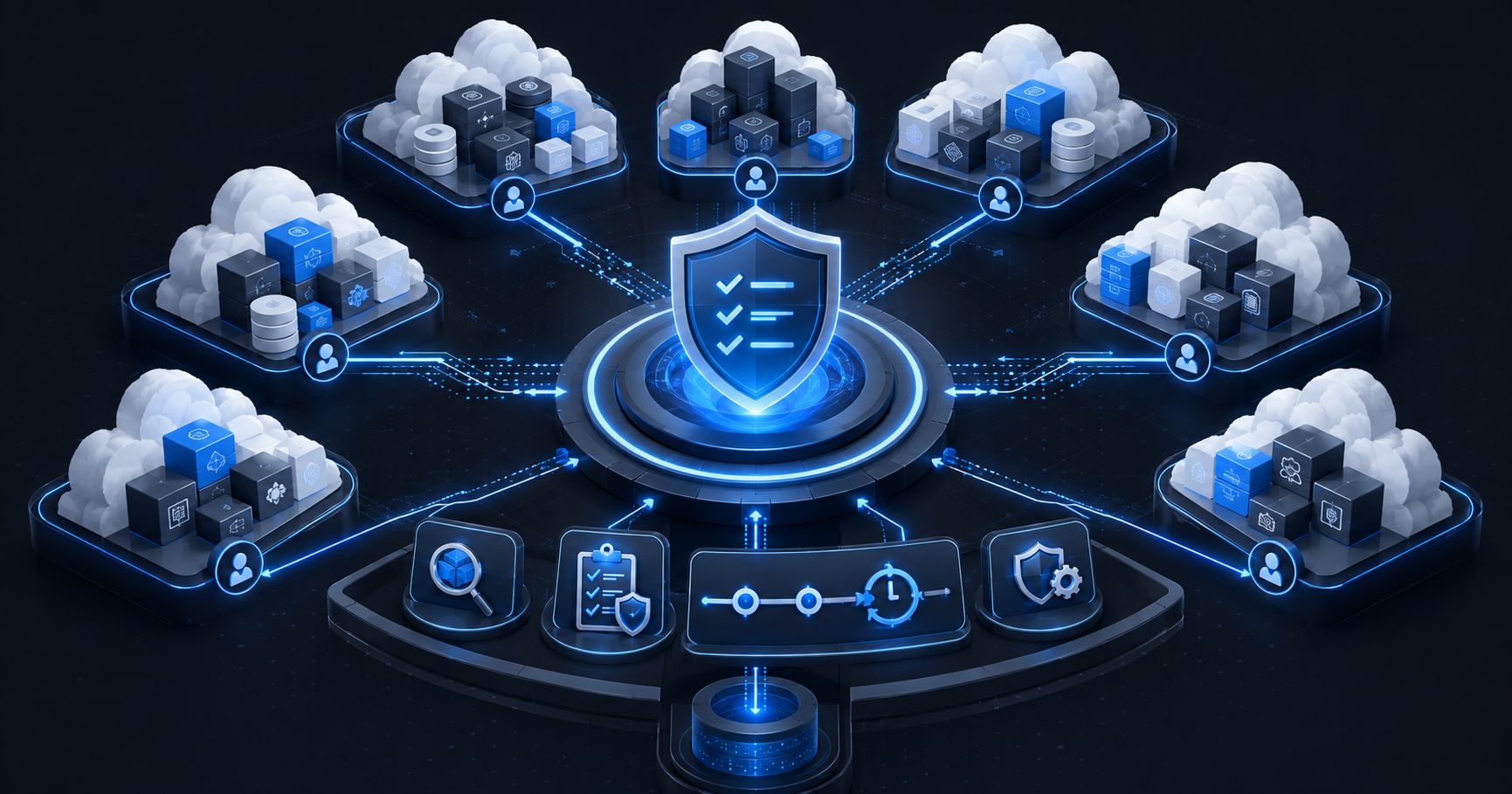
Cloud governance becomes difficult long before an organization considers itself “large.” Resources change continuously, teams operate across accounts and regions, and a configuration that was compliant yesterday can drift today. The challenge is not only inventory—it is knowing what changed, whether the new state violates policy, and how to respond safely.
AWS Config can provide that evidence by recording supported resource configurations and evaluating them against rules. Its value, however, depends on a deliberate multi-account design.
Build a reliable inventory first
Decide which resource types and regions must be recorded. Coverage should reflect the organization’s risk model, not simply enable every option without understanding cost and volume. Global resource types require special attention to avoid unexpected duplication or gaps.
In a multi-account environment, use centralized governance patterns so security and platform teams can see configuration state without manually entering each account. Aggregated views help answer questions such as:
- Which production resources are publicly reachable?
- Where is encryption disabled?
- Which security groups changed before an incident?
- Which accounts have drifted from the baseline?
An aggregator improves visibility, but it does not replace correct recorders, delivery channels, permissions, and regional coverage in the source accounts.
Express policy as a testable control
Managed rules cover many common checks. Custom rules or policy-based approaches can address organization-specific requirements. Grouping controls into conformance packs makes a baseline easier to version and deploy consistently.
A useful rule has clear ownership, scope, severity, and remediation guidance. “Noncompliant” must lead to an actionable decision. Otherwise the result becomes another dashboard that teams learn to ignore.
Not every finding deserves automatic remediation. Low-risk, deterministic changes may be corrected automatically. High-impact changes should create a ticket or require approval. Remediation needs idempotency, bounded permissions, auditability, and a rollback path.
Connect compliance to operations
Configuration history is valuable during incidents. A timeline can show when a route, policy, security group, or resource setting changed and help correlate that event with application symptoms. Send relevant state changes to the organization’s event and notification workflow rather than relying solely on periodic dashboard checks.
Compliance alerts also need noise control. Apply suppressions or exceptions with an owner and expiration date; do not hide legitimate exceptions in undocumented filters. Track aging findings and recurring drift to identify where the deployment process—not an individual resource—needs improvement.
Plan for cost and retention
Recording frequency, number of resources, rule evaluations, and retained history all affect cost. Estimate volume before broad rollout and review it after adoption. Retention should support audit and investigation requirements without preserving data indefinitely by default.
Governance works when teams can understand and act on it. Publish the control catalog, remediation process, and escalation path. Expose compliance feedback early in infrastructure delivery so engineers can fix issues before deployment.
AWS Config is not merely a list of resources. Used well, it becomes a change-evidence layer: a way to trace configuration history, evaluate policy continuously, and respond to drift across an organization with consistency and accountability.
Reference
The official AWS guide explains AWS Config configuration history, relationships and rule evaluation.